
THE FIFTH - Level Design & Game Design Case Study
First-Person Psychological Horror Investigation
Designed and built an investigation horror level across 5 distinct investigation chambers (Foyer Orientation Anchor, Central Artery Corridor, North Records Room, East Study, and South Basement Archive) around a limited-inventory evidence system, with a patrolling killer shaping the player's route.
A psychological horror investigation game set in Tamil Nadu in 2009, where a police investigator must uncover the mystery behind the disappearance of four children and a missing news reporter through environmental exploration and spatial deduction.
Overview & Design Goals
Set in Tamil Nadu in 2009, THE FIFTH puts the player in the shoes of Virat, a police investigator sent to an isolated rural settlement following the disappearance of four children and an investigative reporter named Rani.
As a Game & Level Designer, my core objective was to build a cohesive detective experience anchored in spatial deduction, psychological pacing, and non-linear environmental investigation. Rather than relying on floating objective waypoints or artificial HUD prompts, player progression is entirely driven by physical room layout, lighting contrast, and readable environmental clues.
Player Experience Goals:
- 01Information Scarcity: Players rely on environmental deduction and document inspection.
- 02Spatial Gating: Clear macro-goals (the locked exit) established upfront before exploration.
- 03Diegetic Feedback:In-game Case File UI (TAB key) mirrors an investigator's physical notebook.
- 04Escalating Vulnerability: Tension transitions smoothly from quiet clue hunting to high-stakes chase.
My Role & Responsibilities
Core Gameplay & Systems
Evidence Logging & Player Deduction
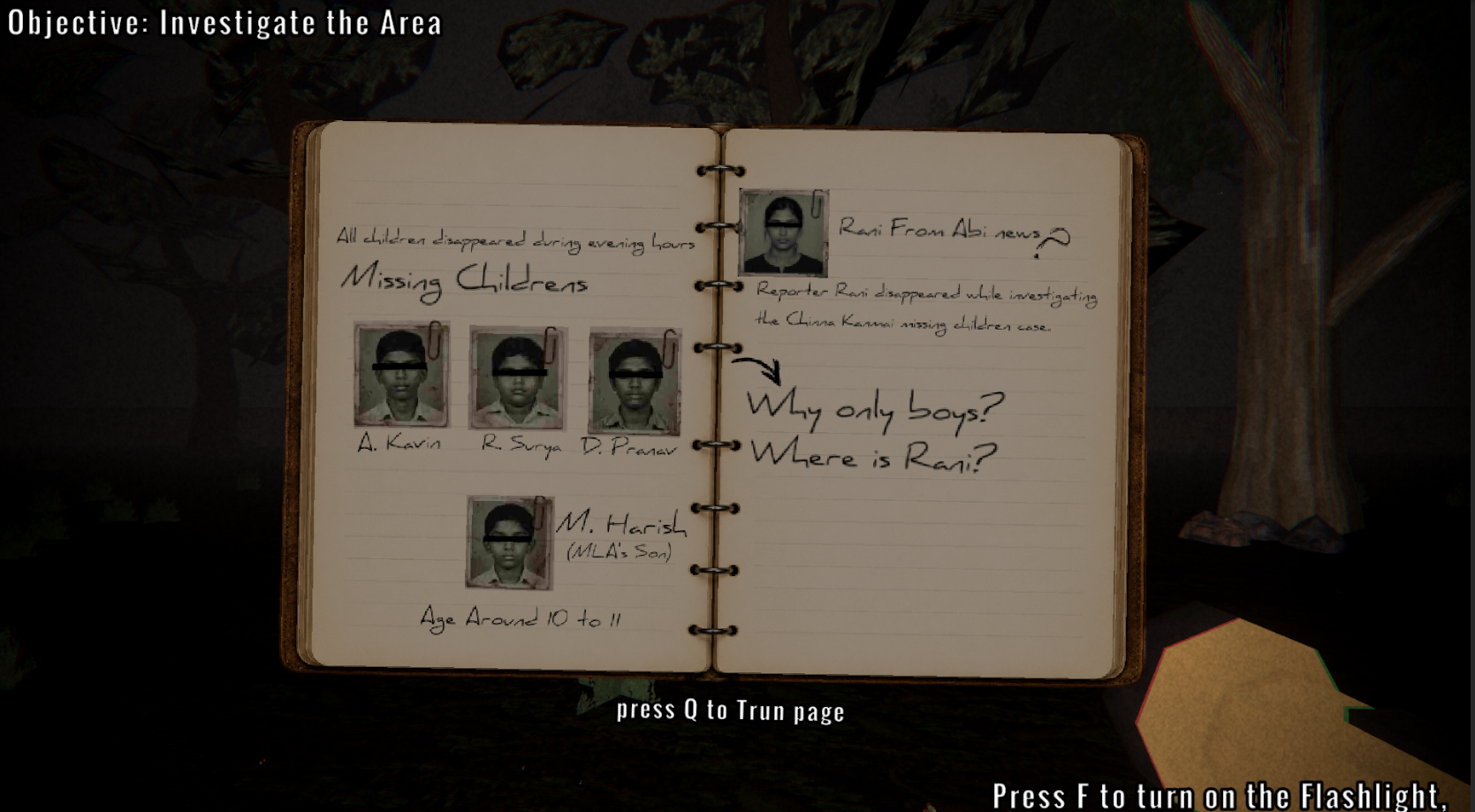
To eliminate intrusive modern floating quest markers, I designed a diegetic Case File system. When Virat inspects letters, audio cassettes, or suspect photos, they are logged cleanly in his investigator notebook, allowing the player to piece together the narrative at their own pace.
Virat carries only one physical key tool at a time (e.g. crowbar or specific key). This eliminates distracting inventory management screens and keeps the player's cognitive load entirely on spatial survival and navigation.
Zero Intrusive UI Markers
Every piece of information is communicated within the 3D space itself:
Game & Level Design
Spatial Gating & Environmental Layout Strategy
The house is structured using classic survival-horror spatial design: a central orientation hub flanked by investigation dead-ends, interconnected by looped escape corridors to prevent unfair trapping during pursuit.
Orientation Anchor
Introduces the locked heavy double doors first. Establishes the player's ultimate escape condition immediately before they explore deeper.
Guidance: Lantern glow on locked lockplate
Tension Choke Point
A narrow corridor with high-contrast shadows. Creaking floorboards act as an acoustic tell for upcoming threat presence.
Guidance: Flashlight cone reveals sightlines
Clue Nodes
Chambers where key letters reside. Designed with table props directly beneath window moonlight beams to draw the eye.
Guidance: Moonlight pools on desk documents
Looped Evasion Paths
Secondary interconnecting doorways that unlock as puzzles are solved, providing circular routes to break killer pursuit without getting cornered.
Guidance: Open doorway silhouette
Level Blockout & Greybox Prototyping
Before texturing or dressing the house, I built rough geometry using Unity primitive blockouts to test navigation feel, sightlines, and chase timings. This ensured the layout supported tension and readability before visual art was committed.
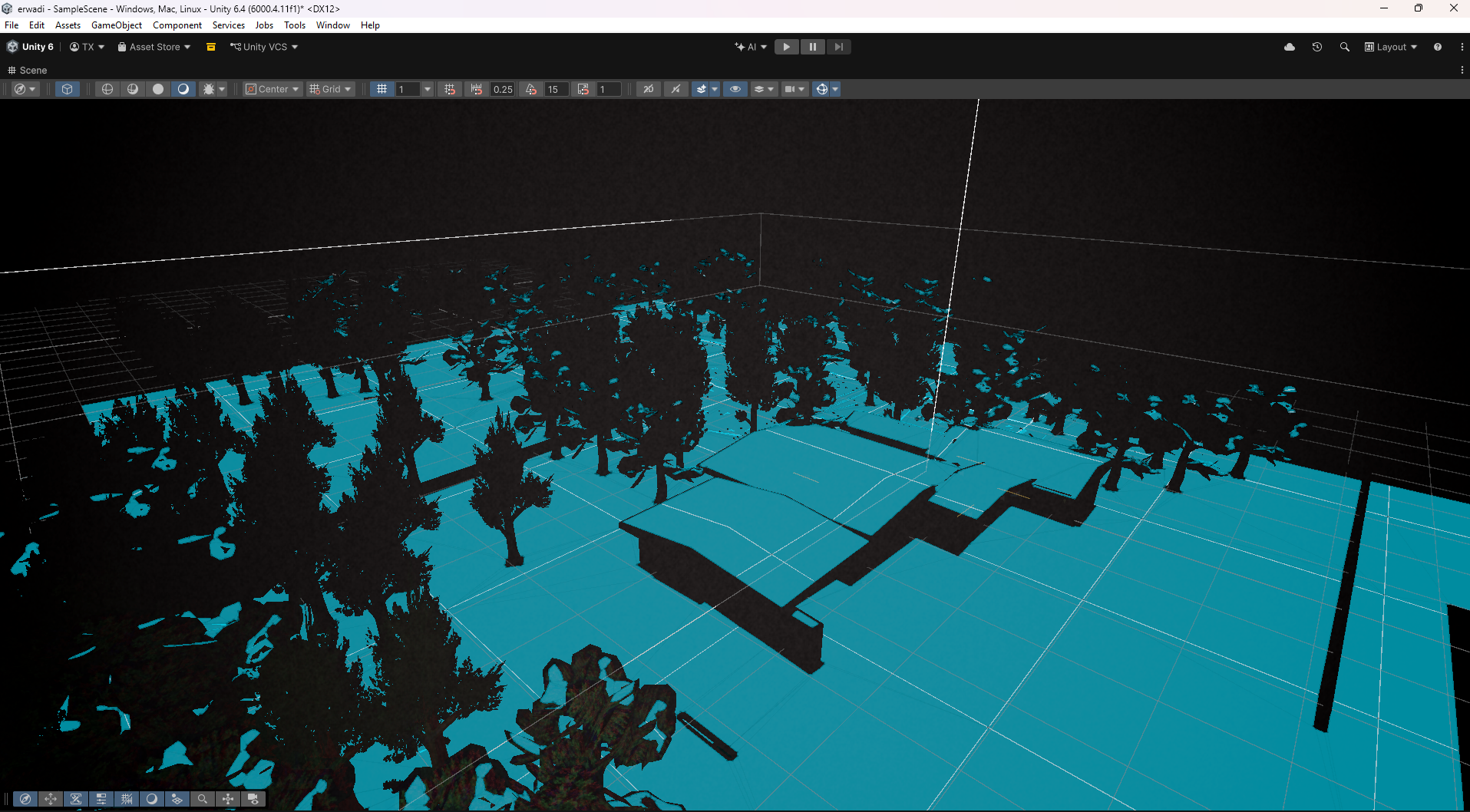
- • Corridor Metrics: 2.1m corridor width — tight enough to induce claustrophobia and restrict player turning radius, while maintaining smooth NavMesh agent clearance during chase sequences.
- • Ceiling Height: 3.2m vertical ceiling height — swallows upward flashlight bounce and preserves oppressive ambient darkness above the player's primary sightline.
- • Corner Angles: 90-degree angular corner cuts — breaks direct sightlines every 8–10 meters, preventing the player from seeing approaching threats until acoustic cues trigger.
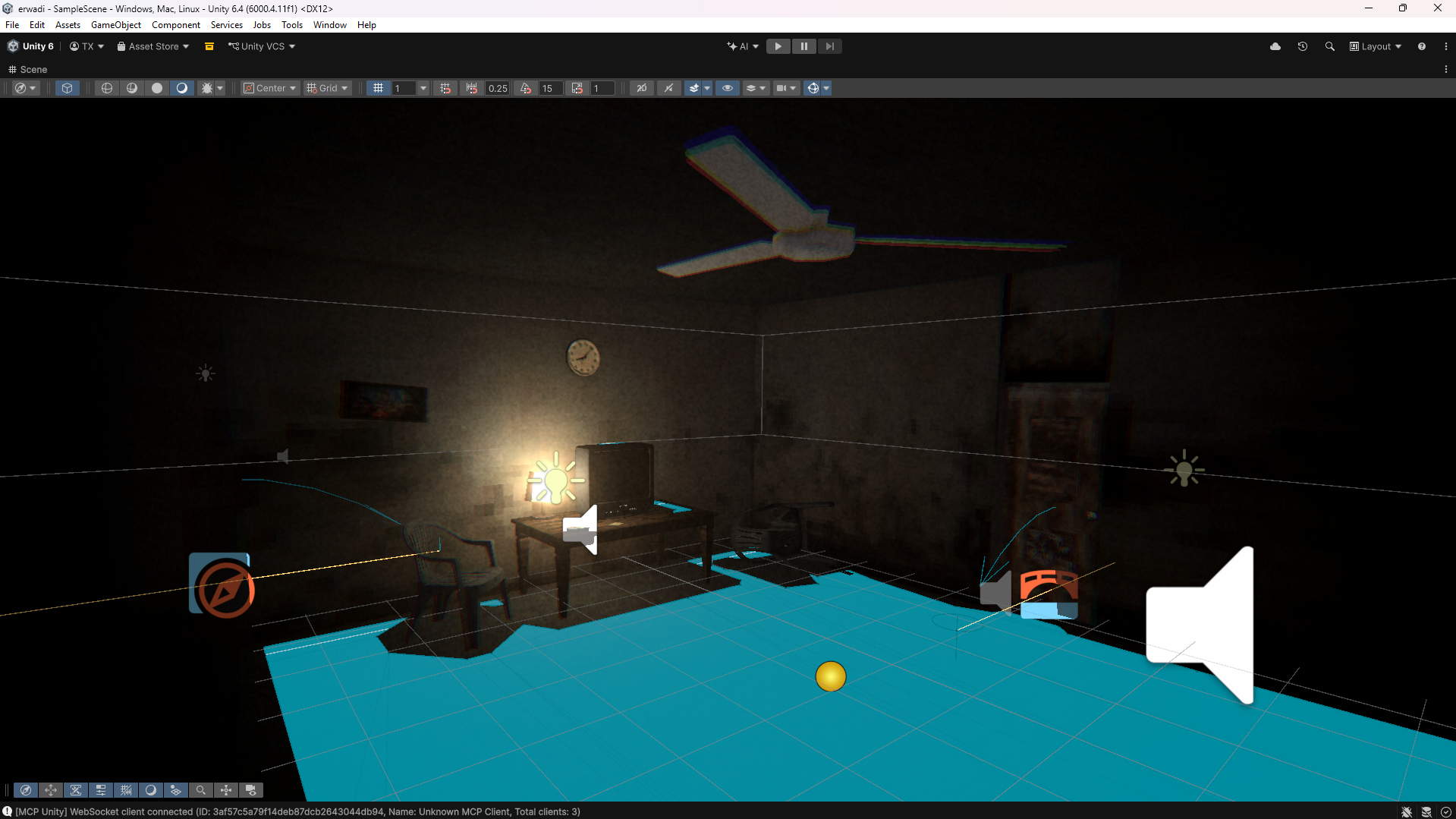
- • Gated Thresholds: Heavy padlocked foyer double doors and barricaded East wing doorways establish visible macro-barriers within the first 60 seconds of player onboarding.
- • Sightline Occlusion: Recessed structural wall pillars placed every 6 meters along primary corridors, allowing fleeing players to break line-of-sight raycasts from the killer.
- • Circular Flow: Circular service corridor connecting the rear kitchen pantry back into the central foyer, preventing unfair dead-end trapping during pursuit states.
Annotated Level Map
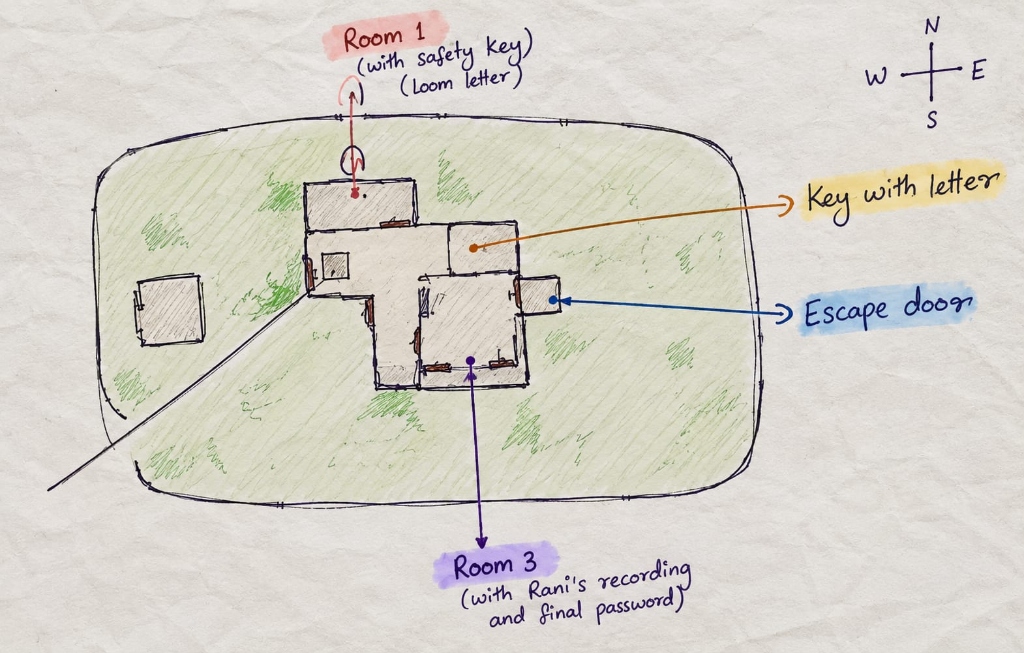
A breakdown of the level layout illustrating starting orientation, clue distribution, critical progression path, locked doors, and looping evasion geometry.
Numbered Legend
How the Level Guides the Player
Without floating objective markers or artificial paths, the player is guided through light composition, architectural leading lines, and acoustic cues.
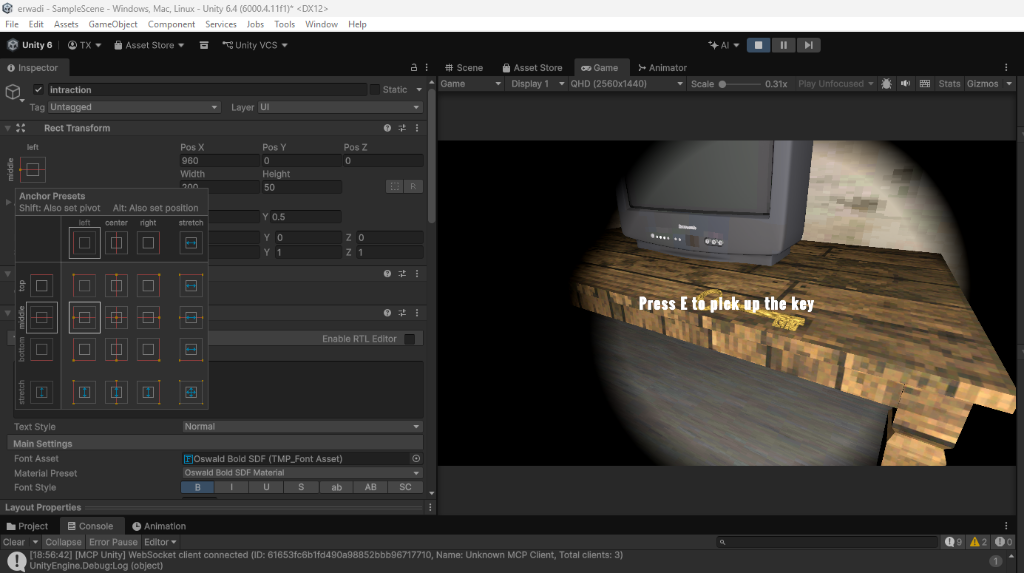
Flashlight illumination highlights key interactables like the room key against wooden tabletop surfaces, pulling player attention directly toward essential objective items.
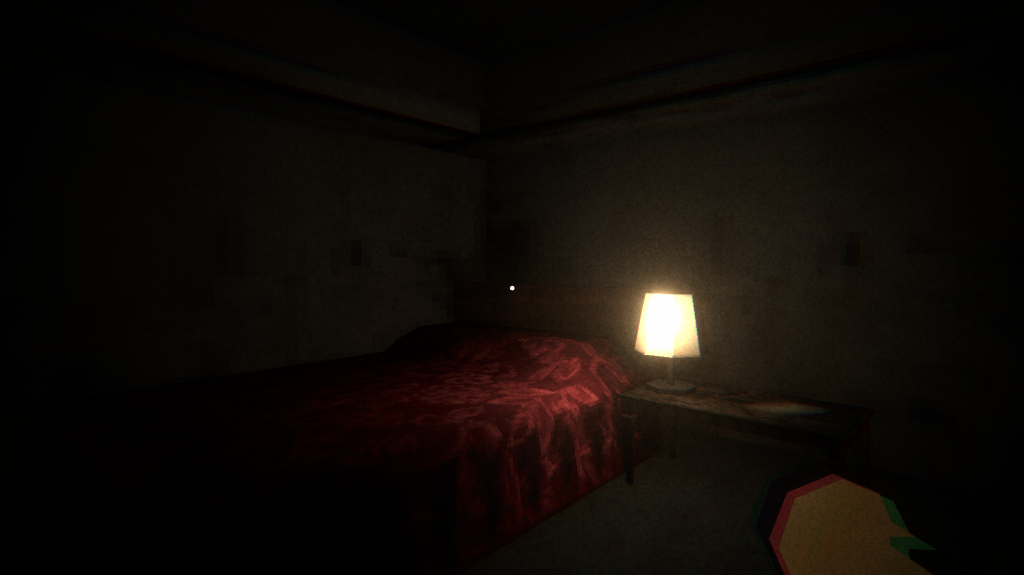
Warm bedside lamps pierce the oppressive pitch-black bedrooms, framing bedside investigation nodes and guiding players into deep room pockets without artificial UI waypoints.
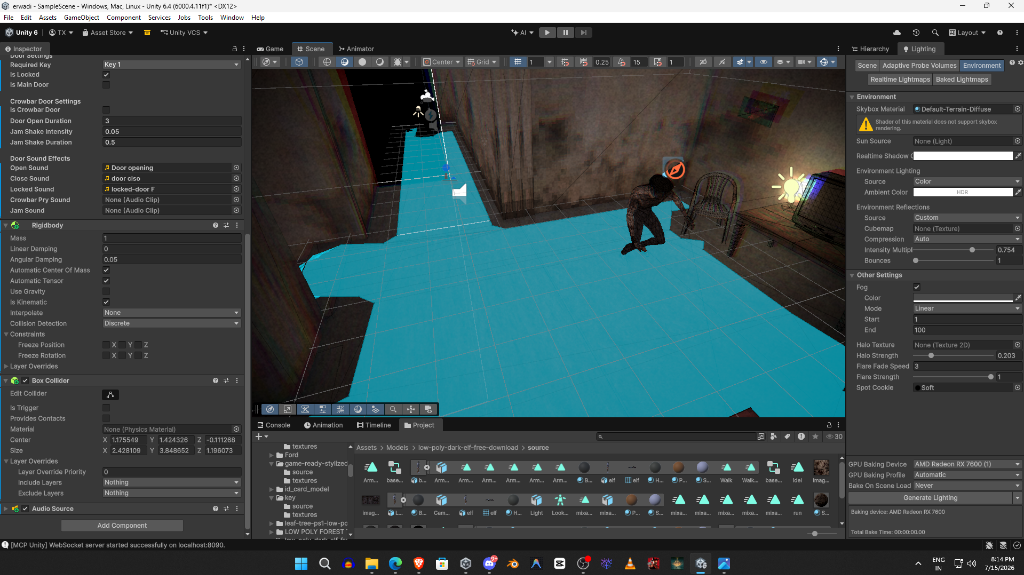
Corridors and doorways are built around NavMesh navigation curves to support the killer's dynamic patrol loops and give fleeing players clear line-of-sight break opportunities.
4-Stage Exploration Puzzle Chain
Initial Gated Obstacle
Player inspects the padlocked front door in the foyer and observes missing numeric code digits.
Exploration & Tool Discovery
Player searches dark rooms to find the crowbar needed to break barricaded doors and access back chambers.
Narrative Clue Assembly
Hidden letters and cassette audio reveal scattered password hints and Rani's last transmission.
High-Tension Escape Execution
Player returns to the foyer under active killer pursuit to input the synthesized code and unlock the exit.
Design Decisions & Spatial Friction
Puzzle complexity in THE FIFTH is tuned specifically to create spatial tension rather than mechanical frustration:
Digits 1 & 2 are etched into the back of an inspectable temple portrait in the West Room; Digits 3 & 4 are embedded in Rani's cassette transcript in the South Chamber. This forces full cross-house spatial traversal before the exit can be unlocked.
Dynamic proximity creaks and accelerated heartbeat audio trigger whenever the player stays in document inspection mode for longer than 6 seconds, preventing passive reading and enforcing spatial vulnerability.
Initial playtests revealed 65% of players overlooked the crowbar under the East desk. I placed a focused warm ambient lantern reflection pooling directly onto the metallic tool, using light hierarchy to guide gaze naturally without HUD waypoints.
Level Environment & Spatial Screenshots
Click any image to inspect lighting composition, blockouts, and environmental details in HD.
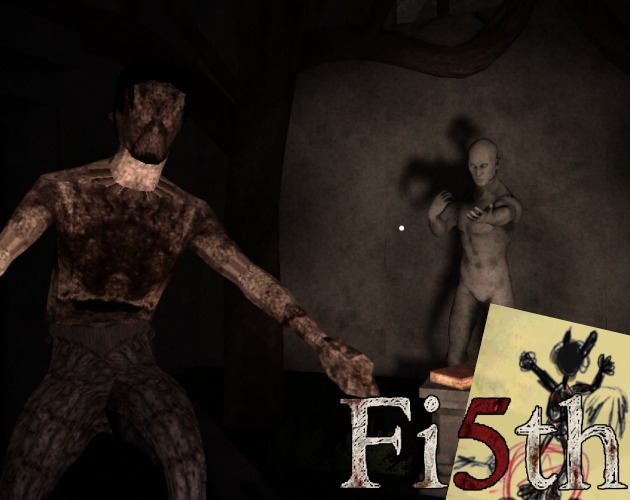
THE FIFTH Official Key Art & Creature Encounter - Psychological Horror Investigation in a retro survival-horror atmosphere.
THE FIFTH Official Game Logo - Psychological Horror Investigation set in Tamil Nadu (2009).
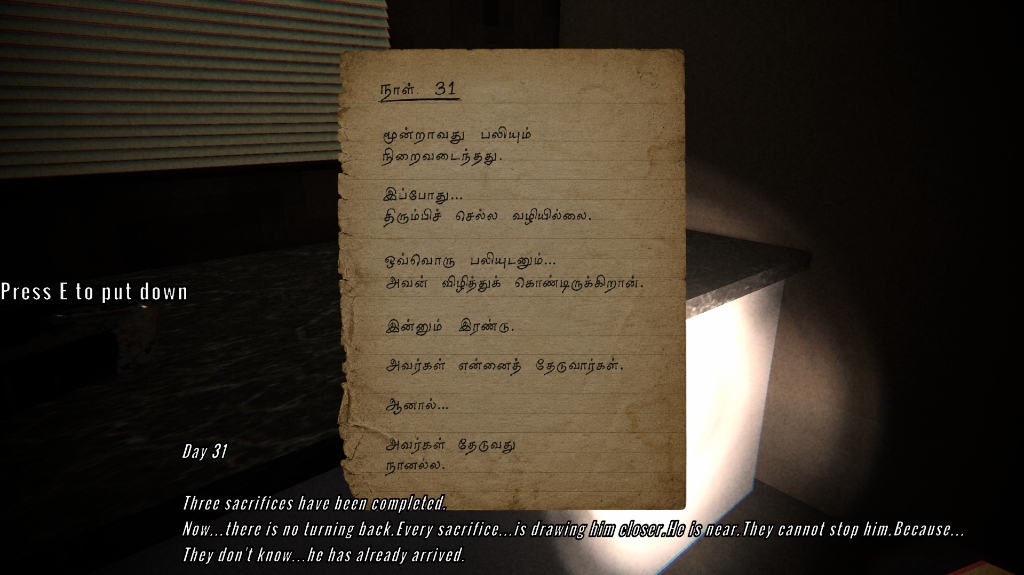
Title Screen & Abandoned House Exterior - Setting the atmospheric PS1/PS2 retro survival-horror tone and establishing the isolated location.
Level Blockout Phase 01: Room & Corridor Spatial Layout - Greybox metric testing for corridor widths, player navigation comfort, and room scale.
Level Blockout Phase 02: Gating & Chase Routes - Spatial setup for locked doors, clue inspection nodes, and looping killer escape routes.
Annotated Level Map & Floorplan - Showing starting orientation, Room 1 (safety key & Loom letter), East key chamber, Room 3 (Rani's recording & password), and the Escape Door.
Focal Illumination & Interaction - Direct flashlight cone lighting draws the player's eye to key interactables on desks and surfaces.
Ambient Contrast & Framing - Warm bedside lamp glow pulls attention into dark bedrooms and highlights key investigation spaces.
Spatial NavMesh & AI Patrol Flow - Room layout and doorway thresholds configured inside Unity to support killer patrol and chase routes.
In-Game Case File UI (TAB Key) - Diegetic evidence recording system where Virat logs clues, suspect details, and victim profiles without HUD clutter.
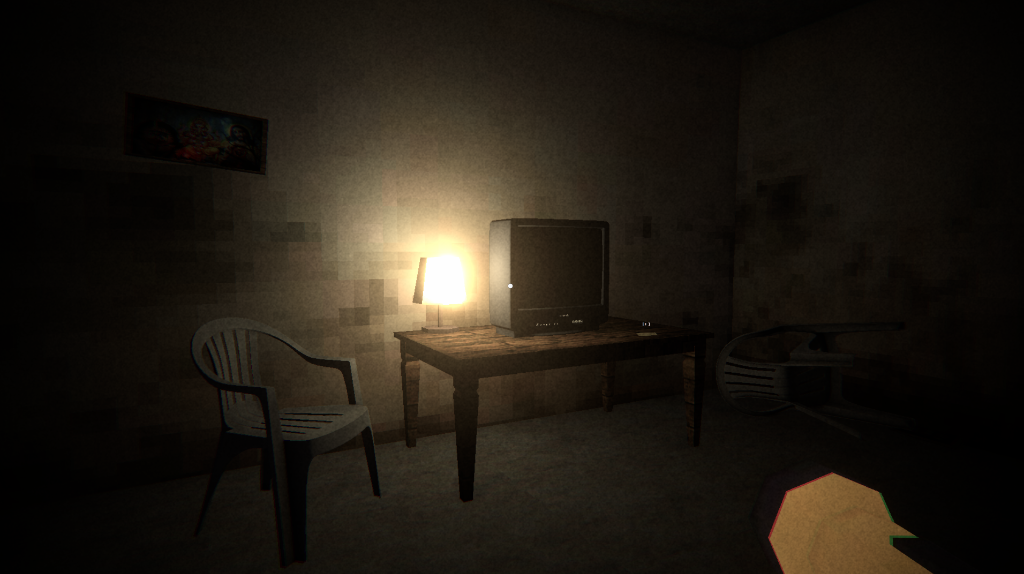
Interior House Corridor - High-contrast moonlight illumination, locked door gating, and environmental guidance.
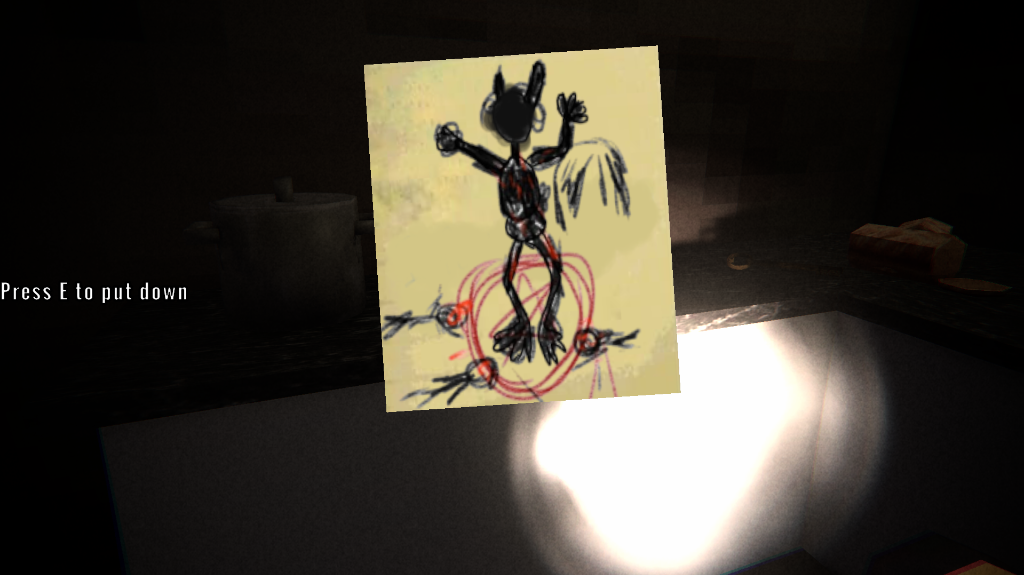
Evidence Room & Clue Node - Interactive document placement under focused lighting pools for natural player discovery.
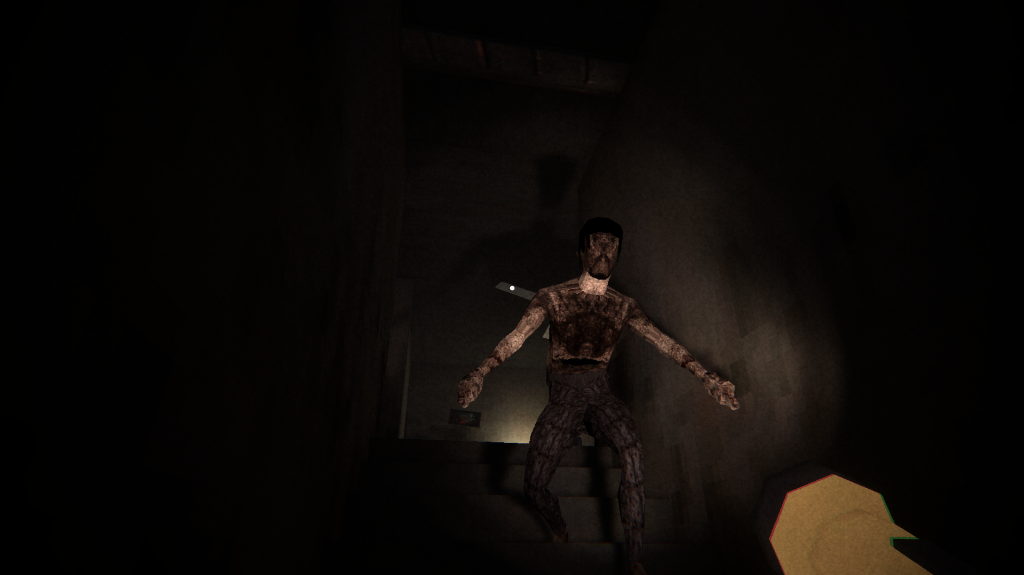
Flashlight Exploration & Tension - Volumetric shadows requiring active flashlight management to navigate deep interior pockets.
Horror & Atmosphere
PS1/PS2-Inspired Survival Horror
I styled THE FIFTH with a PS1/PS2-inspired horror aesthetic, influenced by the visual style and oppressive atmosphere of older survival-horror classics.
Using stylized low-poly assets and focused volumetric lighting allowed for crisp spatial readability while maintaining heavy atmospheric tension.
Dynamic Audio Design
Audio plays a primary role in creating tension and guiding navigation. I edited and customized all soundscapes using Audacity, creating distinctive acoustic layers for each zone.
Narrative Pacing & Tension Curve
A structured pacing rhythm balancing quiet observation with threat escalation.
Tension vs. Beat Progression
Tamil Voice Acting with English Subtitles
To capture authentic cultural immersion, all voice lines were recorded in Tamil and subtitled in English:
Designing for Tamil Nadu, 2009
Anchoring the psychological horror in rural Tamil Nadu during the late 2000s required authentic environmental details:
Implementation Notes
Killer State Machine
The killer entity operates on a 5-state finite state machine — Patrol (navigating designated waypoints), Investigate (heading toward player sound sources), Detect (verifying line of sight), Chase (sprinting toward player coordinates), and Attack (close-quarters contact trigger).
How the Level Supports the AI
Raycast Interaction
C# raycast system validating line-of-sight to documents, locks, and props with contextual crosshair feedback.
Gating State Machine
Controls locked door states, audio rattle triggers, crowbar interactions, and final keypad validation.
Case File Event Pipeline
Modular event bus recording evidence pickups into the TAB journal ledger with Tamil texture inspection.
Credits & Assets
Attribution for 3D assets, audio design, and voice performances utilized in the development of THE FIFTH:
3D environment props, structural furniture, and retro level assets sourced from free & open-source asset repositories.
Environmental audio cues, ambient drones, and dynamic chase stingers sourced from free audio libraries, edited & mixed in Audacity.
• Virat: Aswin Ram
• Rani: Friend (Voice recording)
• Killer: Aswin Ram (Modulated with pitch-shift & EQ)
Play THE FIFTH
Experience the atmosphere, explore the house, uncover the missing children's mystery, and evade the killer in the full playable build.